
Ensure Your Facility Supports
Compliance and Product Integrity
with Donaldson’s Filtration Solutions
As a food or beverage manufacturer, you’re under a deadline to comply with the federal Food Safety Modernization Act (FSMA) by developing a hazard analysis and critical control point (HACCP) plan or Hazard Analysis and Risk-based Preventive Controls (HARPC) plan. Perhaps you’re in the process of making updates to your facility. There is no better time to review the design of your filtration system, which stands at the very center of food safety.
Where to Focus Filtration for Maximum Safety
As you examine your process and facility, pay attention to two main areas of need for filtration:
- Where contaminants are first generated or introduced; and
- Where the process has further exposures to risk.
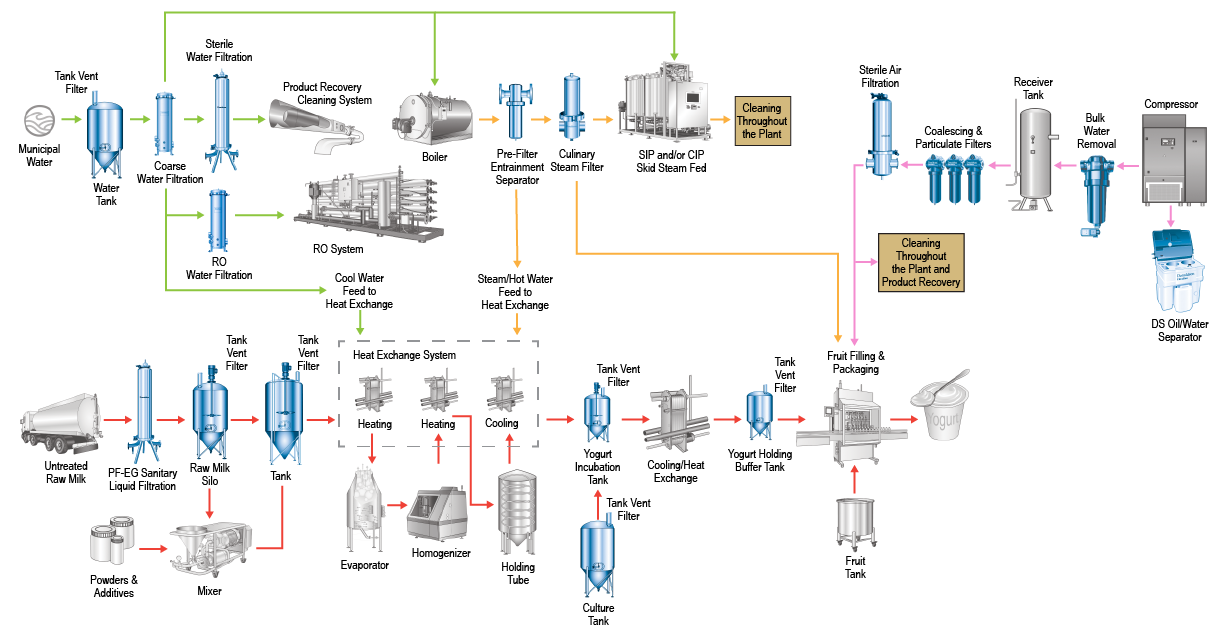
First, address your utility sources and where steam, gases such as nitrogen, and compressed air are generated or bulk-stored. This area is a prime location for oil, moisture, debris, and bacteria—more so if you pull your air or water from supplies that have questionable quality. This is a crucial control point in food safety.
Plan to pre-filter at this location. Elements of approximately 10 microns will capture larger particles and 95–98 percent of all contaminants—an acceptable level for industrial applications, such as washing or cleaning and sterilizing equipment in place (CIP/SIP). Pre-filtration upstream will help minimize replacement costs and downtime by protecting the most expensive fine-fiber filters on your process line. Well or river water carrying a greater amount of debris may require a series of 50-, 20-, and 10-micron pre-filters, and polluted air may need more than one compressed air pre-filter, especially when used in food contact applications. These steps are part of proper food safety monitoring and support food and beverage compliance.
Protect Every Critical Control Point in Food Safety
Not all contamination can be prevented at its source, so next you need to identify critical control point food safety on your process line—wherever there is opportunity for new contamination, or where ingression would be irreversible. Here, you’ll use point-of-use, sterile-grade elements, normally .2 microns or smaller.
- Mixing and Storage Tanks
Undesired bacteria can easily breed in these locations, and oxygen may also spoil some products. Inert nitrogen makes a good tank buffer before you add your ingredients. First, though, be sure to filter the nitrogen to remove potential impurities from tanks, compressors, and hoses.
- Intermediate Steps and Ingredients
Wherever there’s a new step or ingredient introduced in your process line, you have new opportunities for contamination. Later additives may be flavoring or seasoning, preservatives, or emulsifiers. In soda, it’s carbonated CO2. Consider filters for each new ingredient—as well as for any new gas, steam, or air process involved. Each of these is a control point in food safety.
- Final Processing and Packaging
To remove any surviving contamination, plan to filter at the final process step. Packaging itself can be a risk. Wraps and seals that come into contact with the food or beverage should be blasted with culinary steam to kill any microbes picked up in transport or storage. This step is critical for maintaining food and beverage compliance.
Speak with a Donaldson specialist about the right solution for your process.
Choose Certified Equipment for Food and Beverage Compliance
Once you’ve identified the correct locations for filters, consider the quality of your equipment and your choice of elements. Watch for aging or malfunctioning components such as air compressors, which are a frequent source of oil leaks. Pipes and housing can flake or develop crevices that trap decay.
Stainless steel systems are specified in most standards and guidelines; but if components are not 3-A certified, they can still have hidden risks, including:
- Poor welds with rough areas;
- A bead-blasted surface rather than one that is electro-polished;
- Pipe joints with a flange or national pipe thread (NPT) instead of a sanitary connection such as Tri-Clamp® sanitary clamps
Don’t confuse a “3-A compliant” claim with “3-A Certified”. Only certified equipment is independently verified to have a sanitary design, which reduces the number of harbor points where bacteria can gather and multiply—an essential aspect of food safety monitoring and critical control point food safety.
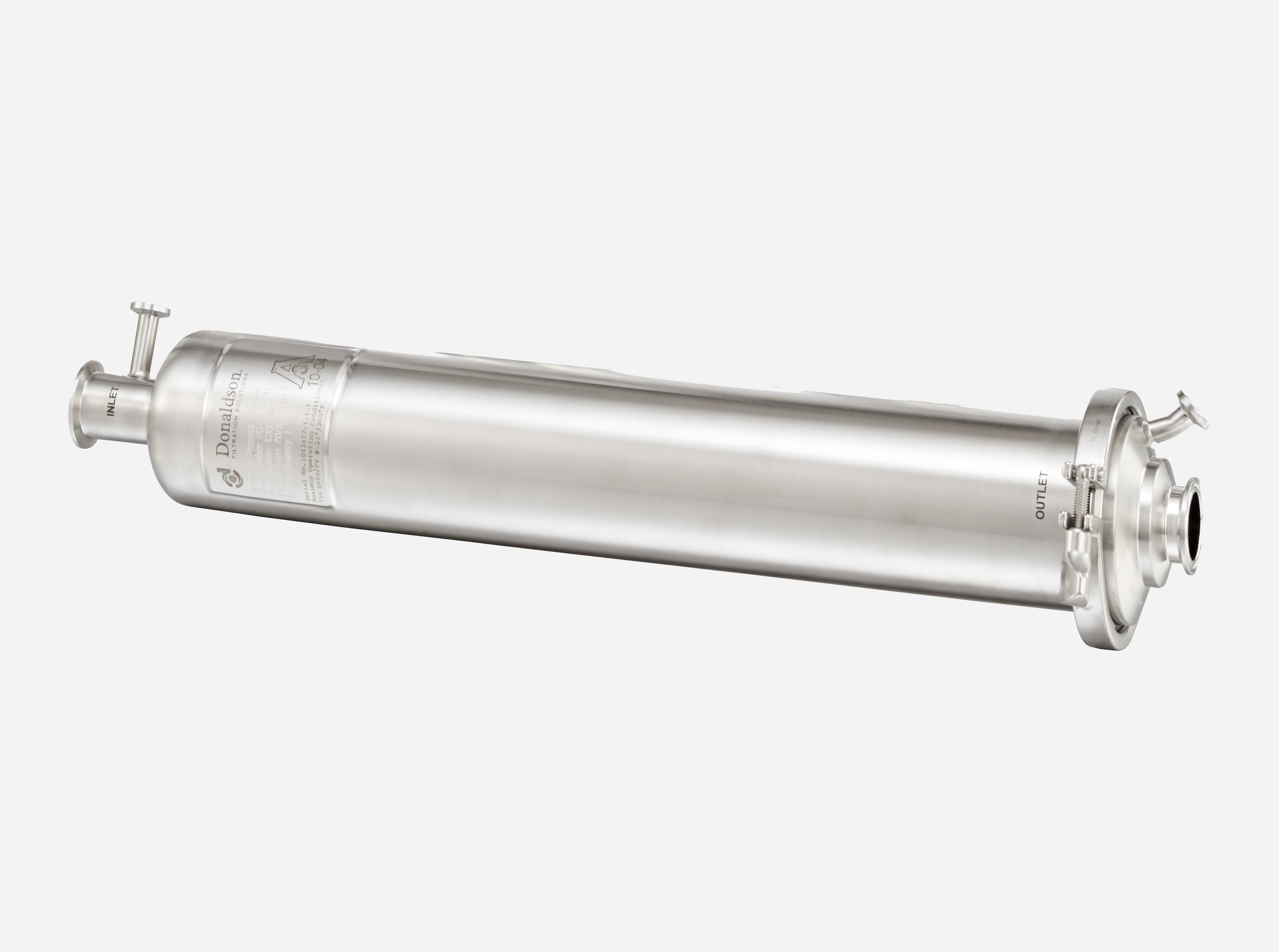
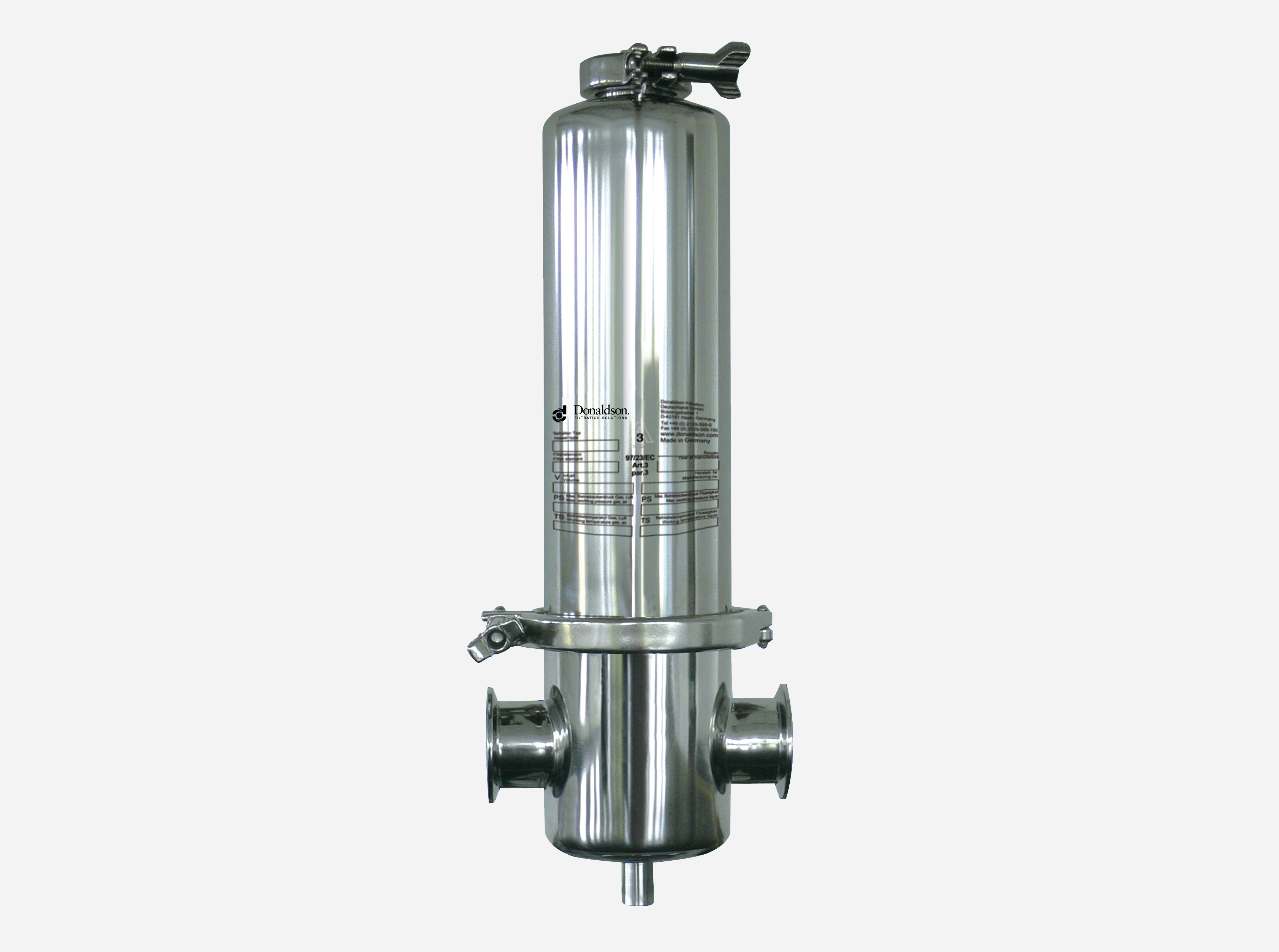
Our Sanitary Stainless Steel Housings
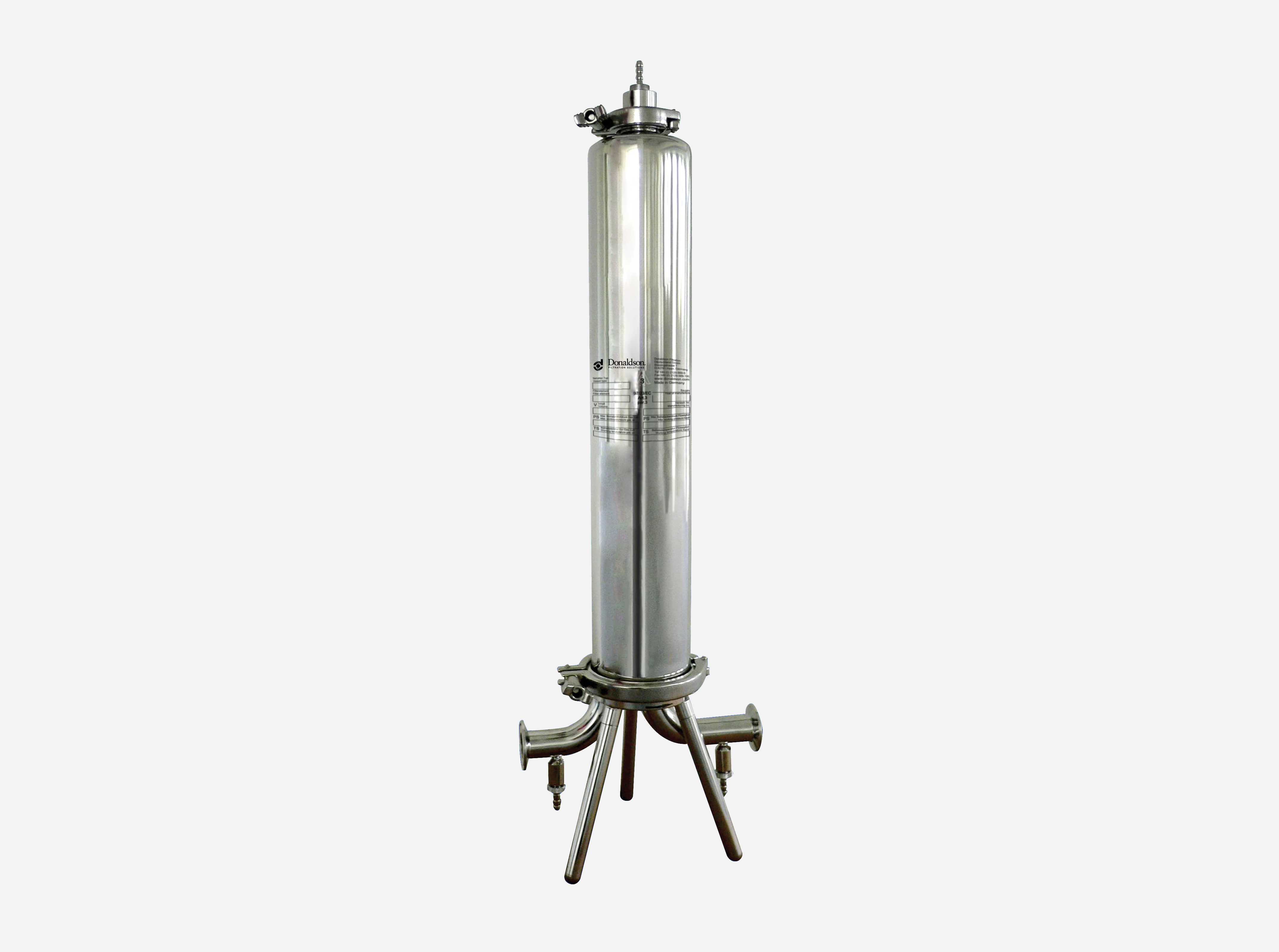
Premier Sanitary Stainless Steel Filter Housing for Liquids
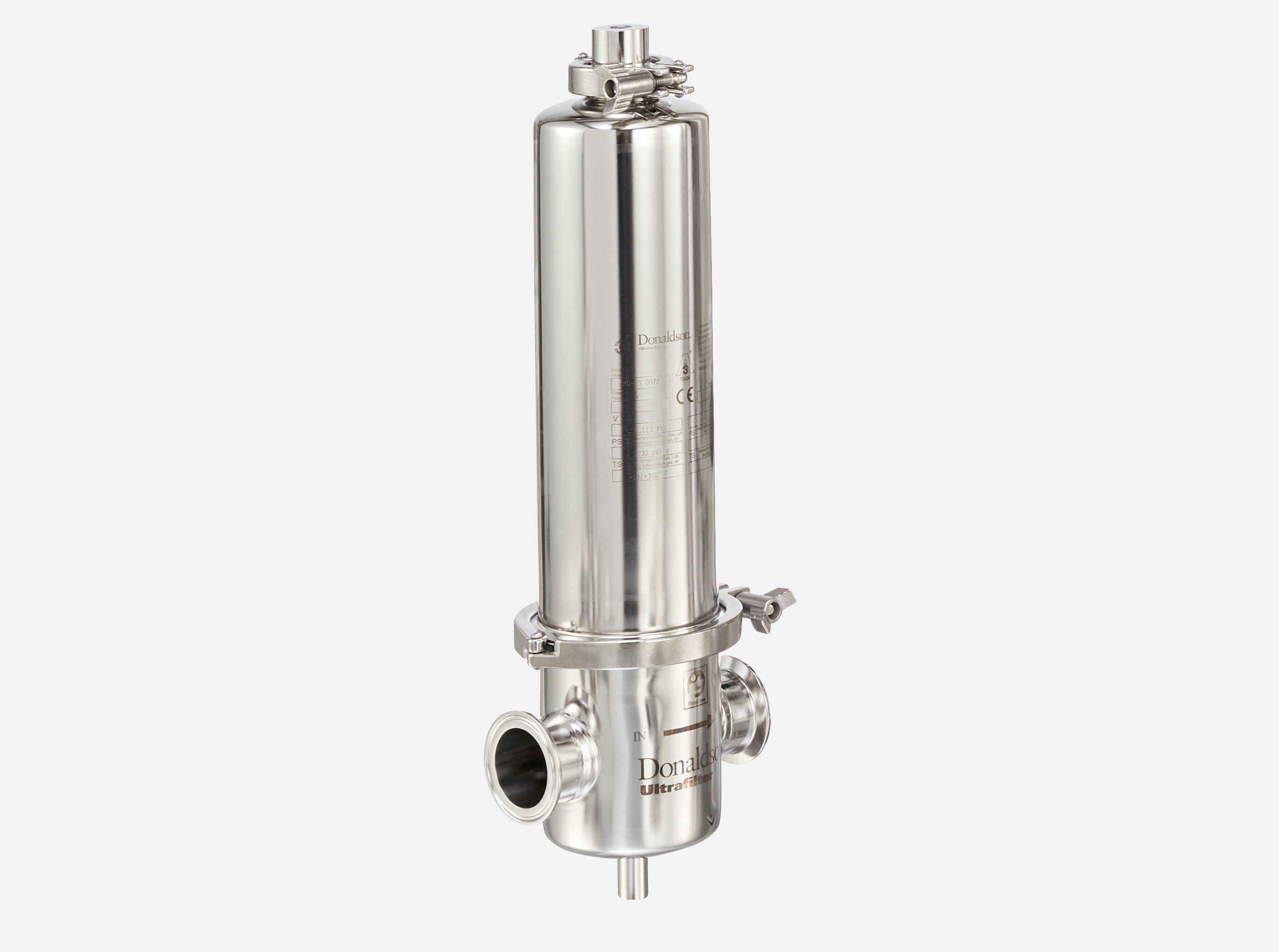
Sanitary-Designed Stainless Steel Gas Filter Housings
Stainless Steel, In-Line Filter Housings for a Variety of Sanitary Gas & Liquid Applications
Selecting Filters for Maximum Efficiency and Compliance
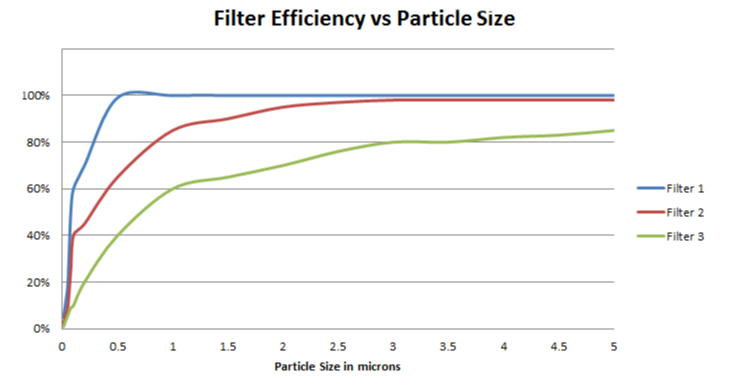
Filter ratings cause some confusion too. A micron rating is only the particle size that a filter is designed to catch. Efficiency is the percentage of capture in that micron range. You need both to select the right elements. A filter labeled 1 micron may sound safe, but may be only 85% efficient (effective). The reverse can also be true. A 10-micron filter that provides 5-log efficiency (99.999%) will be too fine for pre-filtering. The terms “absolute” and “nominal” are also important. Absolute filter media can achieve efficiencies of 99.98% or greater while a nominal filter typically provides 60% to 98% efficiency at that same micron size. Proper selection contributes to food and beverage compliance and ongoing food safety monitoring.
Once you’ve weighed ratings and checked for certification, you can move on to other considerations:
- Depth-loading capacity (retention);
- Number of sterilization cycles the element can safely tolerate;
- How often the element will need changing (filter life); and
- Flow rates, which drive energy costs.
All of these performance factors contribute to total cost of ownership. A pleated liquid cartridge filter that costs more initially may last longer and save you costs compared with a common melt-blown filter, while ensuring food and beverage compliance at all critical control point food safety locations.


